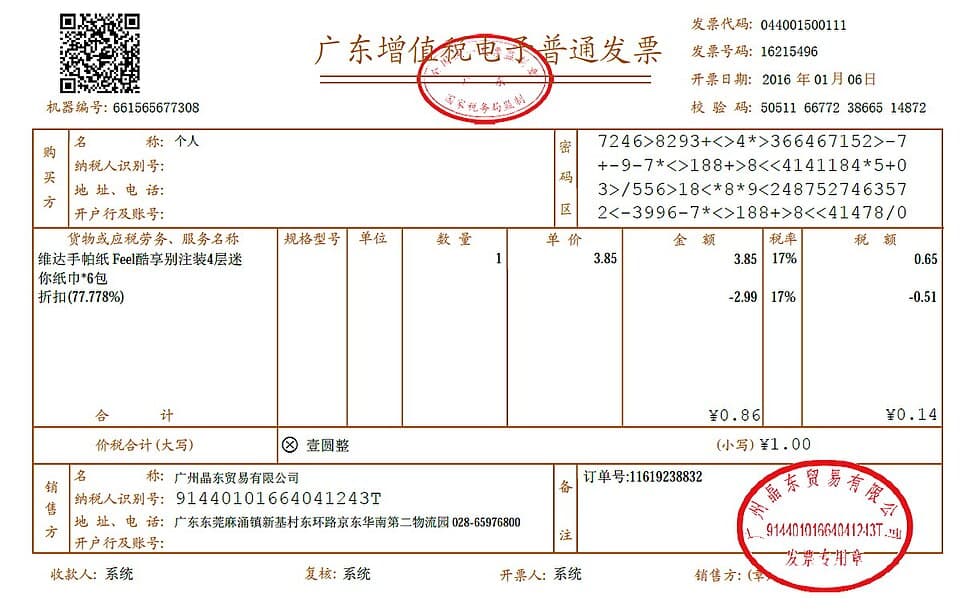

A fapiao is not just a receipt: it is China's official, tax-registered invoice, and for anything you plan to expense back home or bill to a Chinese partner it is the only document that counts. The practical rules for a business trip: ask for it at the moment of payment (the phrase is "kai fapiao", literally "open an invoice"), expect most of them to arrive as an e-fapiao PDF by email or app, and know that a hotel or restaurant can refuse to issue one later but not at checkout. Taxis are the easy case: the meter prints one automatically, you just have to ask for it.
Here is the field guide, scenario by scenario, for a trip through Beijing.
What a fapiao actually is
China runs a state-controlled invoicing system: every legitimate business must issue invoices generated inside the tax authority's infrastructure, so a fapiao is simultaneously your receipt, the seller's tax declaration, and the only expense document Chinese accounting recognises. For a foreign visitor two kinds matter. The general VAT fapiao (now mostly digital, the e-fapiao) is what you collect for reimbursement. The special VAT fapiao is for VAT deduction by Chinese companies and needs a Chinese tax ID, so unless your employer has a China entity, it is not your problem.
Since the system went digital, most fapiao arrive as a PDF or OFD file by email or inside an app, with the same legal force as paper, and since 2026 Chinese counterparties increasingly attach the supporting transaction records too. For your own finance team, the e-fapiao PDF plus your card statement is normally more than enough.
Scenario by scenario
| Where | How to get the fapiao |
|---|---|
| Taxi (street) | The meter prints a paper receipt at the end of the ride; drivers rarely hand it over unasked, so say "fapiao" or point at the meter |
| DiDi (ride-hailing) | In the app: trip details, then Invoice; an e-fapiao arrives by email, and you can batch several trips into one |
| Hotel | At checkout, ask the front desk; they will ask for a "title" (taitou): give your company's name, or say "geren" for an individual fapiao |
| Restaurant | Ask "kai fapiao" when paying; many places hand you a QR slip to self-issue the e-fapiao on your phone in a minute |
| Airport shops and lounges | Same as restaurants: ask at the till, QR slip or printed on the spot |
| High-speed trains | Ticket purchases on the 12306 system issue an electronic reimbursement fapiao; request it in the app or at a station counter within 180 days |
| Flights inside China | The e-itinerary receipt (xingchengdan) from the airline or agent is the recognised reimbursement document, not a regular fapiao |
The "title" question, answered once
When a clerk asks what to put on the fapiao, they mean the buyer name. Three workable answers for a foreign traveler: your employer's registered name (if your company has a Chinese entity or your finance team asked for it), the English name of your company typed as-is (acceptable for most foreign reimbursement flows), or "geren", which means individual. For taxis and trains no title is involved, which is why they are the painless cases. If you expect to need fapiao often, save your title once in the Alipay or WeChat invoice settings and every QR self-issue will fill it automatically; our Alipay for foreigners guide covers the app setup.
Timing rules that save your reimbursement
Ask at the moment of payment, always. A merchant is obliged to issue a fapiao for a legitimate sale, but walking back the next day with a card slip is a coin toss, and after you leave Beijing it is practically impossible. For hotels, do it at checkout while the folio is open. For DiDi you have a comfortable window, the app issues e-fapiao for past trips. Keep the PDFs in one folder as you go; the worst fapiao problem on a business trip is not refusal, it is the traveler who remembers on the flight home.
Getting from the airport with documents intact is the first test: the official taxi rank prints receipts (see our Daxing taxi guide for the rank locations and fare math), and DiDi from the airport gives you the cleanest e-fapiao trail. If you are in town on the visa-free transit, note that fapiao work exactly the same; nothing about the 240-hour visa-free entry limits them.
Frequently asked questions
Is a regular till receipt enough for my expense report?
Can I get a fapiao after returning home?
What is the QR slip restaurants give me?
Do hotels charge extra for a fapiao?
Sources
Practices verified in June 2026. Company policies on acceptable expense documents differ; when in doubt, ask your finance team before the trip, not after. This is an independent guide and is not affiliated with the airport. Photo: Supraios, CC BY-SA 4.0, via Wikimedia Commons.