For a short business trip to China in 2026 there is a real chance you need no visa at all, and many travelers booking expensive M visas simply have not checked. The decision tree is short. If your passport is on China's 50-country unilateral visa-free list (most of the EU, the UK, Canada, Australia, Japan, South Korea and others) and the trip is 30 days or less, you walk in visa-free, and business meetings, trade fairs and contract signings are explicitly allowed. If you are a US citizen, the unilateral list does not cover you, but the 240-hour visa-free transit does, provided you fly on to a third country. The M visa remains the right tool for longer stays, repeat trips on a multi-entry sticker, and anything that smells like actual work rather than meetings.
Here is how to choose, and what each path involves at Beijing Daxing.
The three doors, compared
| Question | Visa-free (50 countries) | 240-hour transit | M business visa |
|---|---|---|---|
| Who qualifies | 50 passports incl. most EU, UK, Canada, Australia, Japan, Korea | 55 passports incl. the US | Anyone with an invitation letter |
| Max stay | 30 days | 10 days (240 hours) | 30 to 120 days per entry, multi-entry available |
| Routing rules | None: round trips fine | Must continue to a THIRD country or region (Hong Kong counts) | None |
| Paperwork before flying | None | None (registered on arrival) | Invitation letter, consulate application, fees |
| Business meetings allowed | Yes, explicitly | Yes, within the transit stay | Yes |
| Paid work / employment | No | No | No (that is a Z visa) |
| Valid until | Confirmed through 31 December 2026 | Standing policy | Per visa |
Door 1: the unilateral 30-day exemption
This is the door most European, British, Canadian, Japanese and Korean business travelers should use in 2026. There is no application, no invitation letter and no fee; you clear biometric immigration at Daxing like any visitor, and the permitted purposes named by China's authorities include business, meetings and exchanges alongside tourism. Two real limitations: the 30 days cannot be extended or converted in-country (overrunning means leaving and re-entering, or trouble), and the programme is currently confirmed only through the end of 2026, so check status before a trip booked far ahead.
Door 2: the 240-hour transit (the US passport route)
US citizens are not on the unilateral list, but the 240-hour visa-free transit covers 55 nationalities including the US. The catch is the routing: you must arrive from country A and depart to country B, not back to A. For business travelers this is often painless, since a Beijing leg can be followed by Seoul, Tokyo, Singapore or Hong Kong, which counts as a separate region for this rule. Ten days is enough for most negotiation rounds and factory visits. The full mechanics, the registration counter at PKX and the rejection traps are in our 240-hour visa-free transit guide.
Door 3: the M visa, when it is actually worth it
Get the M visa when any of these is true: the stay runs past 30 days; you travel to China repeatedly and want a multi-entry visa (US, Canadian and Argentine citizens can obtain 10-year multi-entry M visas, which beats re-checking exemption rules every trip); your itinerary is China-only and you hold a passport outside both visa-free lists; or your legal team simply wants the cleanest possible status for contract signings. The price of admission is the invitation letter from your Chinese counterpart, with the inviter's registration details, your passport data and the trip purpose, plus consulate processing. Allow two weeks; rush services exist.
What none of these doors allow
All three paths cover meetings, negotiations, site visits, trade fairs and signing contracts. None of them covers salaried work, hands-on technical service or anything a labor inspector would call employment; that is Z-visa territory, and the fines for getting it wrong land on the Chinese host as well as on you. If your "business trip" involves actually operating equipment or training staff for weeks, have the lawyers pick the visa.
Daxing practicalities
Whichever door you use, arrival at PKX is the same biometric immigration; transit users register at the dedicated counters (bring the onward ticket). Budget 30 to 60 minutes for the queue, then the city is 19 minutes away by the Airport Express; our airport-to-city guide compares the options. Before you fly, set up Alipay and an eSIM, and start collecting fapiao from the first taxi: your finance team will thank you.
Frequently asked questions
Can I sign a contract while visa-free?
I am American with a Beijing-only round trip. What are my options?
Do I need to carry the invitation letter at the border with an M visa?
What if my meetings overrun the 30 visa-free days?
Sources
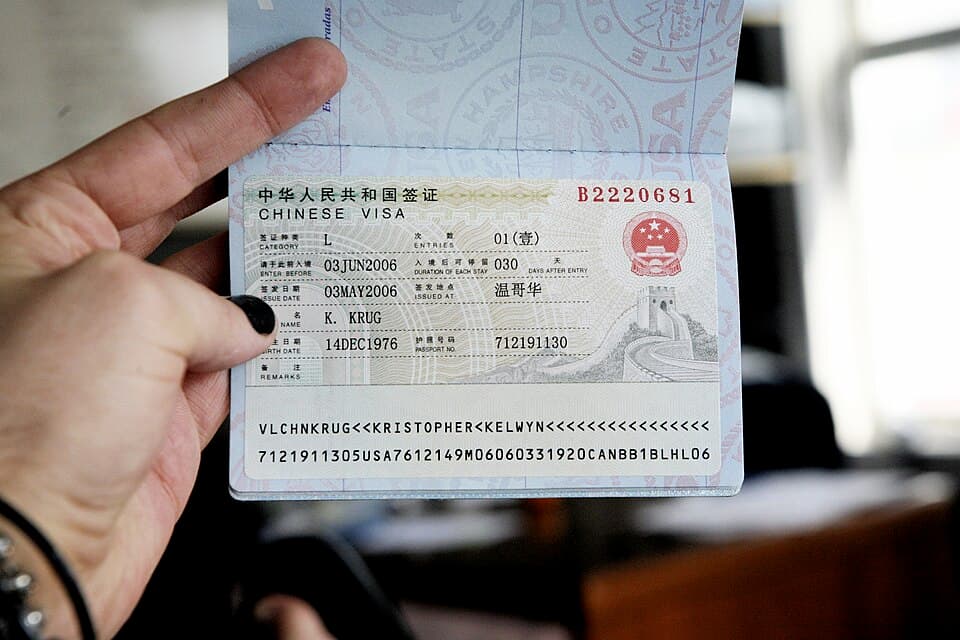
Rules verified in June 2026; visa policy changes with little notice, so recheck the official sources close to departure. Entry is always the border officer's decision. This is an independent guide and is not affiliated with the airport. Photo: kris krüg, CC BY-SA 2.0, via Wikimedia Commons.