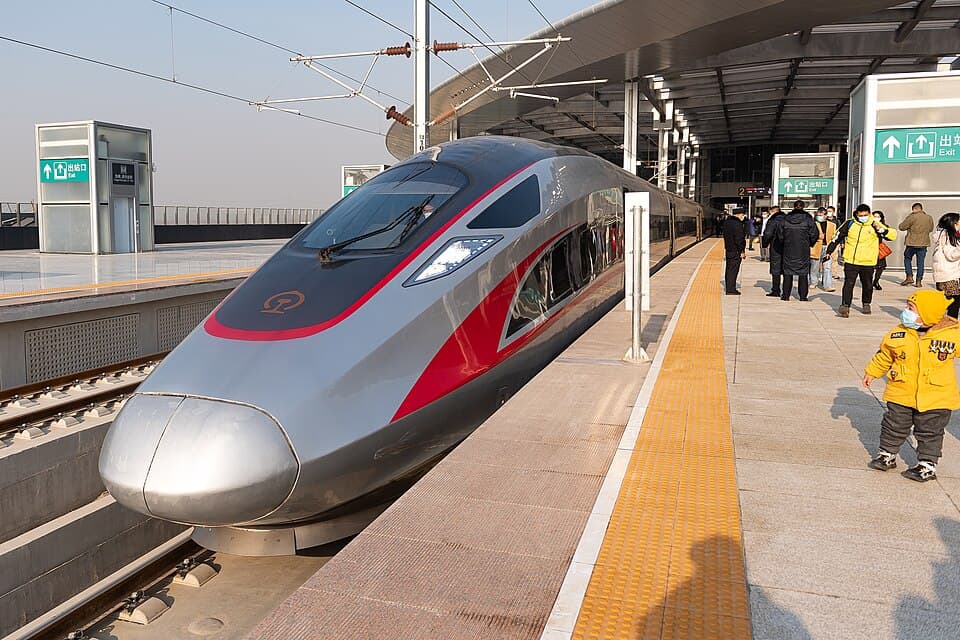
Xiong'an New Area, the state-built "city of the future" about 100 km (60 miles) south of Beijing, is becoming a business destination in its own right: relocated headquarters of central state-owned enterprises, a satellite-internet and biotech cluster, and a construction program the size of a small country. For travelers landing at Beijing Daxing (PKX) the geography is a gift, because the airport sits between Beijing and Xiong'an on purpose. Already today the Beijing-Xiong'an intercity railway takes you from the airport to Xiong'an station in about 20 minutes; in the second half of 2026 the new R1 express line is set to open, adding metro-style frequency on the same corridor with through-running onto the Daxing Airport Express toward central Beijing.
This page is dated June 2026 and we will update it when R1 opens; here is the picture now.
Why business travelers go to Xiong'an at all
Xiong'an is the flagship of the Beijing decongestion program: a from-scratch city in Hebei designed to absorb functions that do not need to sit in the capital. The first wave of relocations is corporate and institutional: headquarters of new central enterprises (satellite networks, energy, chemicals), research campuses of Beijing universities, and the offices that follow them. For a visitor that means new business parks, new hotels, and meetings that a year ago would have happened in Beijing now happen 20 rail minutes from Daxing. The city is also a showcase of Chinese urban tech: driverless buses, underground logistics, and a railway station the size of dozens of football pitches.
Getting there today
| Option | Time | Notes |
|---|---|---|
| Beijing-Xiong'an intercity rail (from Daxing Airport station) | about 20 minutes | A handful of departures daily; book on 12306 or an agent; second-class fare is inexpensive |
| Taxi / DiDi | 50 to 70 minutes | About 60 to 70 km via expressway; the fallback when train times do not fit |
| Via Beijing first | add 30 to 50 minutes | Only worth it if your meetings start in the capital |
The intercity trains run from the railway station underneath the PKX terminal, the same one used by trains to Beijing West. Seat reservation is mandatory, passports work in the e-gates at both ends, and Xiong'an station is vast: budget 10 extra minutes just to cross it.
What R1 changes in late 2026
The R1 (Jingxiong) express is the corridor's upgrade from "a few trains a day" to "turn up and go": a dedicated fast line between Xiong'an and Daxing Airport with planned through-running onto the Daxing Airport Express, meaning one ride from Xiong'an to the airport and onward toward the city. Stations are being fitted with biometric e-gates that support foreign passports, in line with the airport's own setup. For business travel the practical effect is that Xiong'an becomes a same-day trip from anywhere PKX flies: land, meet, fly out. We will update this guide with schedules and fares when the line opens.
Practicalities
Hotels exist but the stock is young: the business districts have new chain hotels (book ahead around expo dates), while options thin out fast beyond them. Mobile payment is even more dominant than in Beijing, so arrive with Alipay configured and a working eSIM. Collect fapiao for the rail tickets and hotel: the 12306 system issues electronic reimbursement invoices. Visa-wise a Xiong'an meeting is ordinary business travel, covered by the same visa-free doors as Beijing; the decision tree is in our business entry guide. And if your trip mixes Xiong'an with the Baigou or Bazhou sourcing clusters nearby, our Hebei sourcing guide covers that side.
Frequently asked questions
Can I do Xiong'an as a day trip from a PKX layover?
Is there anything to see for a non-business visitor?
Do trains accept foreign passports?
Will R1 make the intercity trains obsolete?
Sources
Status as of June 2026, before the R1 opening; schedules and station details will change when the line launches, and this guide will be updated. This is an independent guide and is not affiliated with the airport or the railway. Photo: N509FZ, CC BY-SA 4.0, via Wikimedia Commons.